Bedding & materials
How Cotton Shell Weave Shapes Bedding Comfort
A cotton shell is more than the quiet casing around a pillow or comforter. Its weave, yarns and finish help determine whether bedding feels crisp or silky, airy or closely woven, and how it changes with use. Thread count offers one clue—but never the whole story.
When bedding feels right, it can seem almost effortless: a cool sheet, a pillowcase that does not cling, a pillow whose cover stays soft against the cheek. These small sensations are made from decisions that begin long before bedtime. Fiber matters, but so does the way that fiber is spun, woven, finished and cared for. With cotton bedding, the shell fabric—the outer layer surrounding a pillow or comforter, or the fabric used for sheets—plays a central role in the experience.
That role is easy to overlook. Consumers may scan a label for a high thread count or the word “cotton” and assume they know how a fabric will feel. In practice, a number cannot tell you everything about the yarn, the weave, the finishing process or the fabric’s performance after repeated washing. Two cotton fabrics with similar counts can feel quite different. A better comparison starts with the structure of the cloth and what you want it to do.
This is not a quest for a universally perfect weave. Crisp percale and smooth sateen serve different preferences; neither is automatically superior. The useful question is how a fabric’s texture and construction line up with your sleep environment, sensitivity to warmth, care habits and preferred feel.
What a shell fabric does
A shell is the textile enclosure around a filled bedding item. In a down pillow, it contains the fill while providing the surface that meets a pillowcase—and, in some settings, the sleeper. In a comforter, the shell holds insulation in place and forms the outer face of the finished article. The shell must be suited to its job: secure enough to contain its filling, comfortable to touch, and durable enough for ordinary handling and care.
For filled bedding, construction is a system. The fabric’s tightness and quality of seams contribute to containment, while the fill and the shape of the item influence loft and support. A cotton shell cannot by itself determine a pillow’s firmness or warmth; those also depend on what is inside and how the product is constructed. But the shell can affect the tactile impression, airflow at the surface and the way the item holds up to regular use.
Consider a pillow with a cotton outer cover. Its softness, crispness or slight texture will be apparent through a pillowcase, though the case adds another layer. The fabric may also produce subtle sounds as the pillow moves. Those differences are not merely technical. They shape the feeling of a bed—one of the most frequently handled textiles in a home.
Plain weave and percale: the crisp option
Percale is generally made with a balanced plain weave: yarns pass over and under one another in a regular pattern. This straightforward structure gives the fabric a matte appearance and a familiar crisp hand. Percale sheets are often chosen by people who like a clean, cool-feeling surface rather than a drapey or glossy one.
The open, orderly character of the weave can contribute to a sense of airiness, but “breathable” is not a single property that can be read from a weave name alone. Fiber quality, yarn size, finishing and fabric weight all matter. The finished cloth, the layers on the bed, room temperature and the sleeper’s own heat preferences also shape how cool a bed feels. Still, a cotton percale’s crisp texture may be appealing to someone who dislikes a slick surface or wants bedding that feels less enveloping.
Percale can soften with laundering, though the result depends on the fabric and how it is washed and dried. A new set may feel more structured than one that has been used for months. Some people enjoy that evolution; others prefer a smoother feel from the beginning. If possible, compare a fabric swatch or examine a product’s care information and construction details rather than making a decision from a marketing phrase alone.
Sateen: smoothness and drape
Cotton sateen uses a weave structure that places more yarn floats on one side of the fabric. Those longer exposed sections can give the surface a smoother hand and a subtle sheen compared with plain-weave percale. Sateen often drapes more fluidly, which can make it feel soft and inviting to people who prefer a closer, silkier touch.
That smoothness brings a different set of trade-offs. The surface may feel warmer or more enveloping to some sleepers, although warmth depends on the complete fabric and bedding arrangement rather than weave alone. Longer floats can also be more vulnerable to snagging than the interlaced surface of a plain weave, depending on yarn and construction. A careful user may find sateen wears well; a household with frequent friction, pets or rough laundering may need to give durability and care instructions extra attention.
Neither “crisp” nor “smooth” is a measure of quality on its own. A well-made fabric should be assessed by its materials, construction and finish, as well as the feel that suits its user. The point of knowing the difference is not to declare a winner. It is to understand why two cotton options can behave differently before they enter the wash—or the bedroom.
Thread count: a useful clue, not a verdict
Thread count refers, broadly, to the number of threads in a square inch of woven fabric, counting lengthwise and crosswise yarns. It is commonly used as a shorthand for density, and density can be relevant. But thread count does not independently establish softness, strength, breathability or value. The number does not tell you whether the yarns are fine or coarse, how well they are spun, what kind of cotton was used, or how the fabric was finished.
Counting practices and yarn construction can further complicate comparisons. A fabric made with different yarn structures may be represented in ways that make its advertised count difficult to compare directly with another fabric’s. That means the largest number on a label is not a reliable shortcut to the most comfortable bedding. An extremely dense fabric may feel less airy to one person, while a lower-count fabric made with good yarn and careful construction may feel excellent.
Instead of treating thread count as a score, read it as one detail among several. Look for the fiber content, weave, fabric weight when provided, care instructions and clear product specifications. Then connect those details to a real preference: Does the sleeper want a crisp surface? Is a smooth hand the priority? Is easy laundering important? Will the item be used in a warm room or under several layers? The answers carry more practical weight than a single headline number.
A stated count can still help when products are otherwise described consistently. It offers context about the fabric’s construction, but the context matters. If two products have different weaves or use different yarns, a direct numerical comparison may not tell you which will feel better or last longer. Treat texture and construction as a pair of questions, not a contest for the biggest figure.
Yarn, finish and the feel beyond the label
Before cotton becomes cloth, it is spun into yarn. The characteristics of that yarn—including its fineness and consistency—affect how the woven surface feels and performs. The weave arranges the yarns; the finishing process then helps determine the fabric’s final hand, appearance and behavior. Finishes can make cloth feel softer or smoother, but the sensation a new fabric offers may change after washing and use.
There is no simple label that captures every stage. “Cotton” identifies a fiber, not a complete performance profile. “Percale” and “sateen” give information about weave and surface, but do not specify every yarn or finishing choice. Thread count describes one dimension of construction, not the entire cloth. The more responsibly a product is described, the easier it is for a shopper to connect claims to material facts.
Shell fabric also interacts with what it encloses. A tightly constructed cotton cover may be selected to help contain down clusters, while the fill itself contributes much of a pillow’s loft, resilience and thermal character. When comparing bedding, separate those functions in your mind: shell for surface, containment and some aspects of airflow; fill for much of the cushioning and insulation; and the complete construction for how the item behaves as a whole.
A pillow example: reading the details together
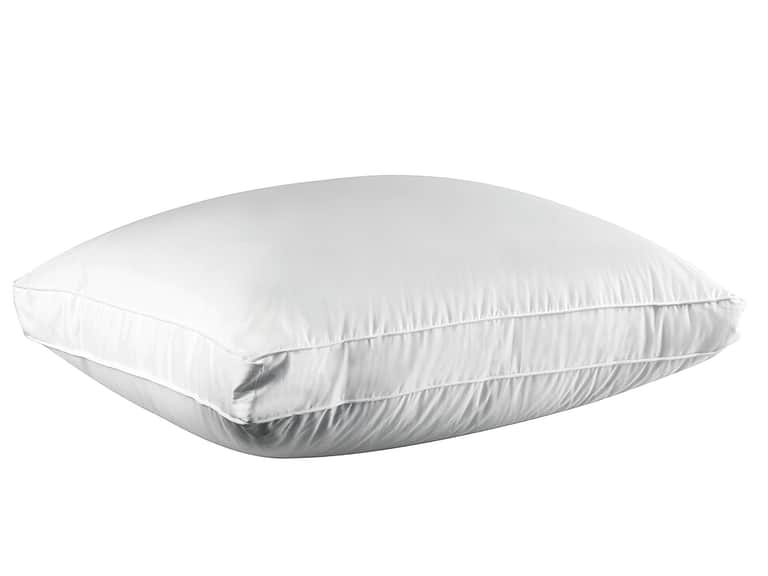
The Clean Bedroom Manhattan Down-Filled Pillow offers one example of how shell details can sit alongside fill and construction information. Its listed outer cover is 100% cotton with a 330 thread count. The product is described as medium-firm, with high loft, a two-inch gusset and 850 fill power large-cluster goose down. Its specifications also list double-stitched piping and standard, queen and king sizes.
Those details should be read as parts of a whole rather than as substitutes for one another. The cotton shell describes the outer material; the fill power and fill describe the pillow’s interior; and the gusset and stitching describe aspects of construction. The listed count may help characterize the cover, but it cannot alone determine how the pillow will feel, how supportive it will be or whether its loft suits a particular sleeper. Pillow height and firmness preferences, sleeping position and personal comfort remain individual considerations.
For readers comparing cotton-shell pillows, this is a useful reminder to look beyond one specification. Review the cover fabric, fill, dimensions and care guidance together. A washable pillow protector can help keep the shell cleaner and reduce the frequency with which the pillow itself needs attention. The Manhattan pillow’s product information recommends a washable protector; users should follow the care instructions supplied with the specific item.
More product details are available on The Clean Bedroom Manhattan Down-Filled Pillows page. The listing describes the fill as sourced to the Responsible Down Standard and notes testing and certification information for the down. Such claims concern sourcing and fill, not the cotton shell’s weave; keeping those categories distinct makes product descriptions easier to evaluate.
How washing changes cotton bedding
Cotton bedding is not static. Washing and drying remove soils, but they also subject yarns and fabric surfaces to water, detergent, movement, heat and friction. Over time, those forces may alter softness, texture, color and strength. A fabric that feels crisp from the package may relax. A smooth surface may become more familiar and pliable. Excessive heat or rough handling, by contrast, can encourage shrinkage, wear or damage.
Care labels are the first source of guidance because products differ. Follow the manufacturer’s directions for water temperature, detergent, drying and any special restrictions. When no unusual treatment is required, gentler handling—avoiding unnecessarily hot water, harsh chemicals and over-drying—can help limit stress on textile fibers. Do not assume every cotton product should be washed in exactly the same way: a fitted sheet, pillowcase and filled pillow are different items with different construction and care needs.
For a pillow or comforter, check whether the care label permits machine washing before placing it in a washer. The shell may be cotton, but the filling can require a specific process. If the item is not intended for home laundering, follow the stated alternative rather than relying on assumptions based on fiber content. A removable, washable protector can take much of the everyday contact and make regular hygiene easier, while the enclosed pillow can be cared for according to its own instructions.
Drying deserves equal attention. High heat and prolonged tumbling can be hard on some fabrics and filled items. Use the care label’s directions, and make sure a washed filled product is thoroughly dry before storage or use. Dampness trapped in bedding is undesirable and can affect freshness. Where instructions call for a particular drying method, follow them rather than improvising with heat settings that may damage the shell or fill.
Everyday habits that preserve performance
Maintenance is often less dramatic than a new purchase, but it can matter more over the long run. A washable protector shields a pillow from routine oils and perspiration. Regularly changing pillowcases reduces direct soil on the shell. Rotating pillows can help distribute use, although rotation is not a substitute for cleaning or for replacing an item that no longer provides the comfort and support its owner needs.
Storage also affects textiles. Keep bedding clean and completely dry before putting it away. A breathable storage environment is generally preferable to sealing damp items in a container, where moisture may linger. Avoid compressing filled bedding for long periods unless its care guidance permits it; compression can affect loft and recovery. If a product has been stored, allow it to air and recover as appropriate before use.
Small changes in feel are normal with use. They are not always a sign of failure: cotton often softens, and the hand of a fabric can evolve as finishes relax. But persistent thinning, torn seams, visible loss of containment or a marked change in an item’s performance are reasons to inspect it. Care can extend useful life, but it cannot reverse every kind of wear.
Choosing a weave for the way you sleep
Start with sensation. If you like a cool, crisp, matte surface, a cotton percale may be worth considering. If you prefer a smoother touch and more fluid drape, sateen may be a better fit. These are tendencies, not guarantees: fabric weight, yarn, finishing, room conditions and personal temperature all influence the final impression.
Then consider use. Bedding that will be washed frequently benefits from clear care directions and a construction suited to regular laundering. A pillow shell needs to contain its fill and withstand routine handling. A sheet set needs to fit the mattress and tolerate the household’s laundry habits. For any item, inspect seams and finishing where possible, and look for product information that explains more than the headline count.
- For a crisp feel: Compare plain-weave percale options and note how the fabric is finished.
- For a smooth feel: Look at sateen, while considering that a silkier hand may feel warmer or more enveloping to some sleepers.
- For a pillow or comforter: Evaluate the shell together with the fill, seams, construction and care requirements.
- For durability: Consider yarn and fabric quality, stitching, expected use and laundering—not thread count alone.
- For easier upkeep: Use protectors where appropriate and follow the item’s own care label.
If you can handle a swatch, do so. Texture is difficult to translate into a number, and people interpret “soft” differently. If you cannot examine fabric in person, look for precise descriptions of weave and fiber, consistent specifications, and a clear return policy. Reviews may add context, but individual comfort reports are not a guarantee that the same fabric will feel identical to you.
A more useful way to read the bedding label
The best bedding choice is rarely discovered by following one metric. It emerges from a short chain of questions: What is the fabric made of? How is it woven? What is its surface like? What does the product contain? How should it be cleaned? And does that combination match the sleeper’s preferences and habits?
For cotton shell fabric, weave is a practical starting point. Percale and sateen offer recognizably different surfaces, while yarns and finishing refine the result. Thread count contributes information about construction, but it is not a stand-in for touch, airflow or durability. Washing then becomes part of the fabric’s story, gradually changing its hand and testing its ability to hold up under everyday use.
That is why a cotton label should invite closer attention, not end the investigation. Bedding is a working textile: folded, slept on, washed, dried and returned to service. Understanding its construction makes the choice less mysterious—and more personal. The aim is not to buy the most impressive number or the most elaborate description. It is to find a fabric whose feel and care demands make sense in the room where it will be used, night after night.